Explore Salina and the Aeolian Islands
Aeolian Islands
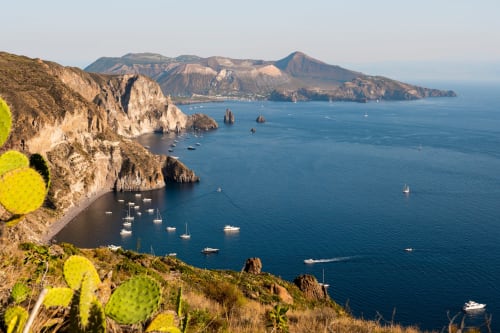
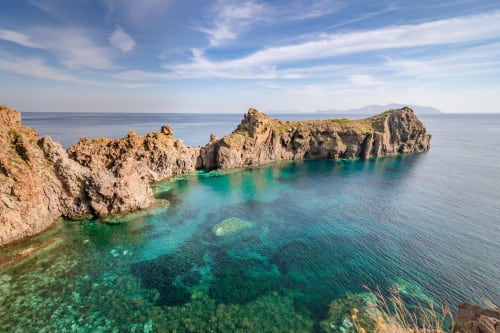
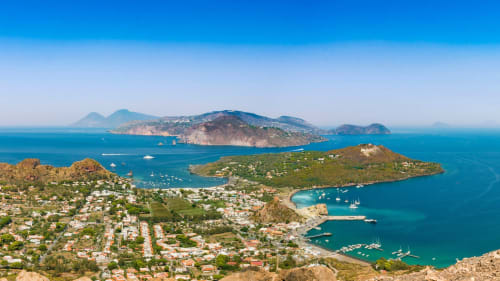
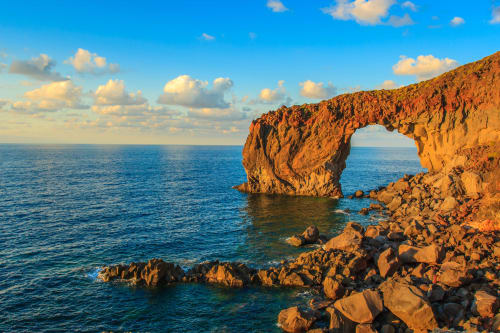
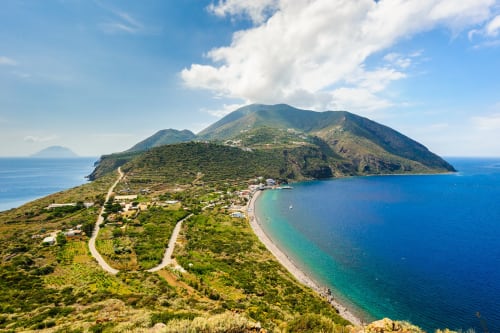
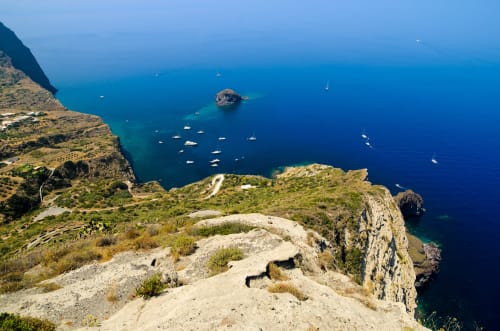
Despite the volcanic activity that is still ongoing, or even because of it, the Aeolian Islands are fascinating islands, a natural environment rich in flora and fauna with wonderful beaches, coves, caves, inlets, stacks, and with a great variety and richness of seabed. Also linked to volcanism are the earliest human settlements on Lipari and Salina, dating back to several centuries before 4000 B.C., for the search for and use of obsidian, the volcanic glass due to the cooling of lava, which was the sharpest material available. This trade brought the islands extraordinary prosperity. The study of the islands, dating back to the 18th century, provided volcanology with the definition of two types of eruptions, the Vulcanian and the Strombolian, and continues to enrich the science of the field. Vulcano, the third largest island in the archipelago after Lipari and Salina and the southernmost, remained uninhabited due to strong volcanic activity. Only after the last major eruption in 1888 did Crater Grande cease to be active, and some farmers were able to settle and live on the island. Currently, volcanic activity is limited to fumarolic emissions, which are present almost everywhere. Stromboli is the only island in the archipelago with permanent volcanic activity and frequently offers the extremely impressive spectacle at night of the sciara of fire descending to the sea. The Aeolian Islands have a special identity because they are the peaks of a submarine chain of reliefs, so they are the visible part of the submerged mountain range that follows a linear development of about 87 km, from the northeasternmost point (the island of Stromboli) to the westernmost point (the island of Alicudi), and that extends deep into the west with other submerged volcanoes.
Tourism
What to see in Salina
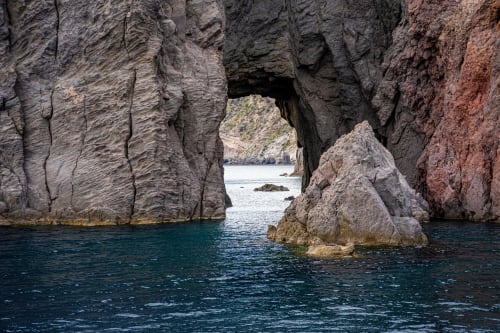
The caves
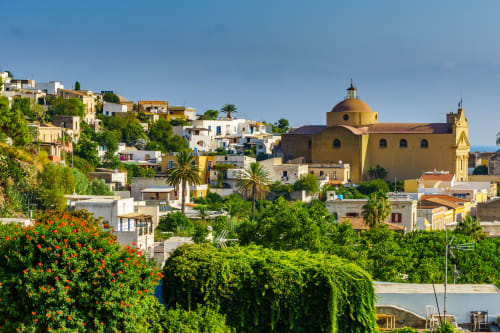
Santa Marina
- The archaeological excavations of Portella and Punta Barone.
- A stroll along the main street, featuring Art Nouveau houses, small gardens, and glimpses of inner courtyards.
Wine Museum
You said:
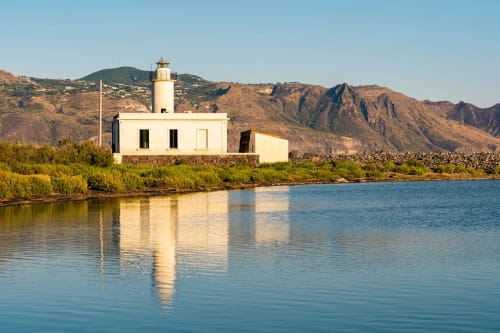
Lingua
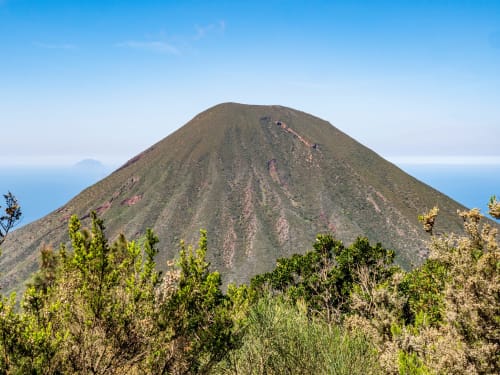
Fossa delle Felci
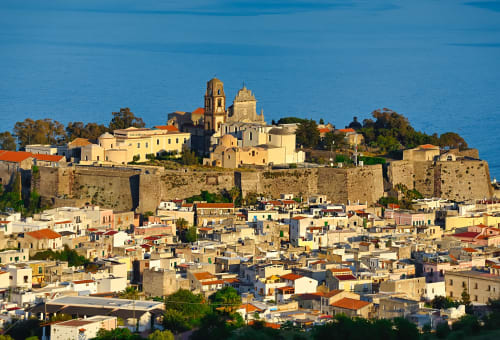
Aeolian Emigration Museum
Not to be missed
- The walk over the salt pond to the old lighthouse at sunset.
- The small but well-kept archaeological museum.
Malfa
In the main square, you'll find the 18th-century Church of Sant’Anna, whose interior houses numerous paintings and sculptures, including the Nativity of the Virgin (1742), the Madonna of the Rosary (19th century), the Madonna of the Guard (20th century), a wooden sculpture of the Sacred Heart (1925), a sculpture of Saint Anne with the Virgin and Child (20th century), and another depicting Saint Joseph with Jesus.
The surrounding area is lively, with local eateries and small shops. The square's pavement is adorned with a compass rose, symbolizing the connection between these islands and the winds that dominate them.
Pollara
Leni
In the mid-19th century, the sanctuary underwent its first restoration. Today, it is the third-largest church in the archipelago. Inside, there is an 18th-century canvas depicting the Madonna protecting the islands and a wooden statue of the Madonna with the same iconography as the ancient painting that was uncovered. More recent modifications include the addition of two bell towers flanking the statue of the Madonna and the expansion of the central nave.
Rinella